Space Launch Services Are Booming: The $82 Billion Race to Orbit
The global space launch services market leapt from $27 billion in 2025 to nearly $32 billion in 2026, and it's only accelerating. Reusable rockets, small satellite demand, and bold public-private partnerships are fueling a race to orbit projected to hit $82 billion by 2032. Here's who's driving it and what it means for the new space economy.
Space is officially open for business — and the numbers are staggering. The global space launch services market surged from $27.43 billion in 2025 to $31.84 billion in 2026, a single-year jump that would have seemed fantastical a decade ago. According to a January 2026 report from ResearchAndMarkets.com, that momentum isn't slowing down. With a projected CAGR of nearly 17%, the market is on course to hit $82.23 billion by 2032. The race to orbit isn't just heating up — it's already a full-throttle sprint.
What's Lighting the Engines?
Three forces are doing the heavy lifting behind this explosive growth, and they're reinforcing each other in ways that make the trajectory look almost inevitable.
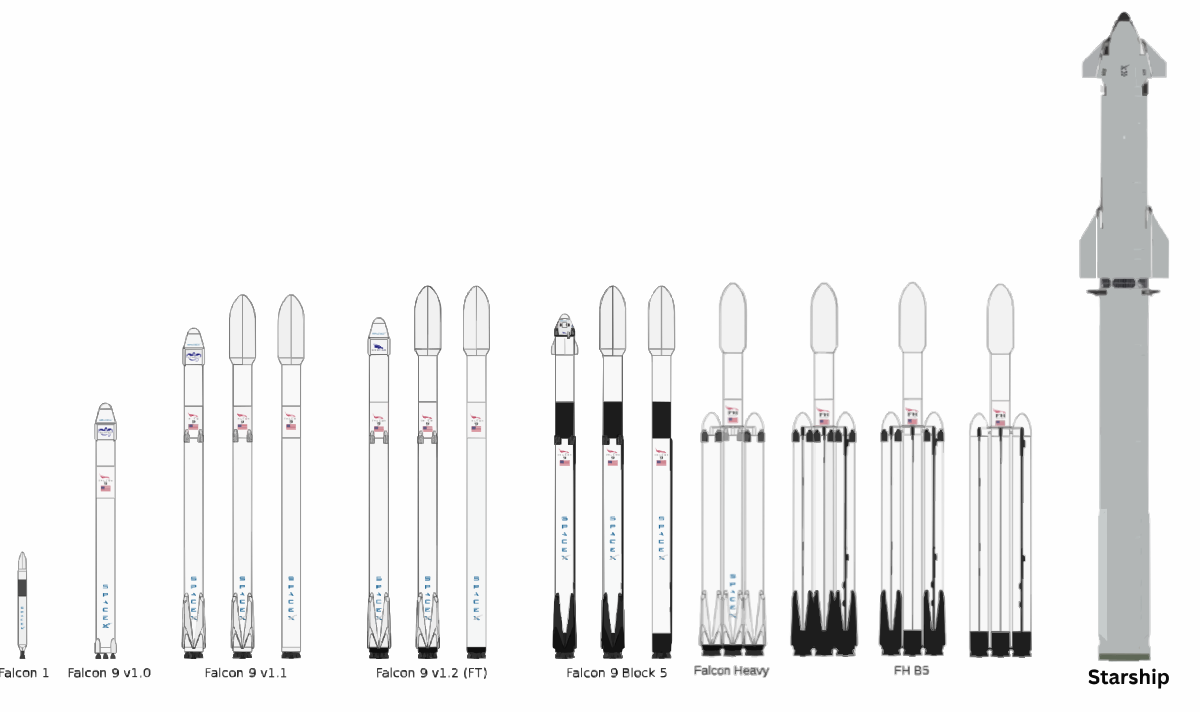
- Reusable rockets. The economics of space access changed forever when reusability became a commercial reality. SpaceX demonstrated this most dramatically — completing 161 commercial launches in 2025 alone and commanding an estimated 82% share of the commercial launch market. When a booster can fly, land, and fly again within weeks, launch costs plummet and launch cadence skyrockets.
- Small satellite demand. According to Allied Market Research, the small launch vehicle segment is one of the fastest-growing categories in the entire market. LEO and MEO constellations for broadband connectivity, Earth observation, and navigation are multiplying fast — and every one of those satellites needs a ride to orbit.
- Public-private partnerships. Governments aren't stepping back — they're doubling down by leveraging private-sector agility. Precedence Research notes that the government sector is still expected to contribute the largest revenue share over the forecast period, with agencies increasingly contracting commercial providers rather than building bespoke national launchers from scratch.
Add to that a wave of next-generation launch vehicle investments, growing navigational and surveillance needs, and expanding commercial space tourism ambitions, and the demand pipeline looks almost limitless.
The New Competitive Landscape
SpaceX's dominance is real, but the field is getting crowded — and more interesting. North America maintains its grip as the leading region, backed by government subsidies, a mature private-sector ecosystem, and a regulatory environment that has gradually become more launch-friendly, per SkyQuest's market analysis. But the geography of ambition is shifting.
Asia Pacific is emerging as the most dynamic growth frontier. China, India, Japan, and South Korea are all ramping up satellite launch programs — both government-funded and commercial — driven by surging demand for communications infrastructure and Earth observation capabilities. New private launch providers are entering markets that were state monopolies just five years ago.
Europe is also repositioning. With Arianespace navigating a difficult transition period and new players like RocketFactory Augsburg and Isar Aerospace pushing for their first orbital attempts, the continent is betting on a new generation of lighter, more flexible launchers to carve out a competitive niche — particularly in the dedicated small satellite segment.
The underlying business model is evolving too. Modular manufacturing, supply chain resilience, and sustainable launch practices are no longer just talking points — they're becoming competitive differentiators as launch frequency increases and environmental scrutiny intensifies.
Satellites Are the Real Payload
Strip away the spectacle of crewed missions and lunar ambitions, and the commercial engine of this market is remarkably straightforward: satellites. Grand View Research pegged the broader market at $14.94 billion in 2023 and projects $41.31 billion by 2030, with satellite deployment consistently cited as the primary demand driver. Communications, Earth observation, precision navigation, and emerging applications like in-orbit servicing are all fueling a seemingly insatiable appetite for orbital slots.
Pre-launch services — mission planning, integration, and payload processing — are also capturing a growing share of revenue as satellite operators demand more end-to-end support from their launch partners. This services layer is quietly becoming one of the most lucrative parts of the value chain.
The $82 billion forecast isn't a ceiling — it may well be a conservative baseline. As reusability matures, launch costs continue to compress, and new commercial applications emerge from on-orbit manufacturing to space-based solar power, the demand for reliable, affordable access to orbit will only deepen. The companies and nations that secure launch infrastructure dominance today are positioning themselves as the gatekeepers of tomorrow's space economy. The window to claim a seat at that table is open — but it won't stay open forever.